Canyonlands National Park
UT · National Parks

Canyonlands National Park

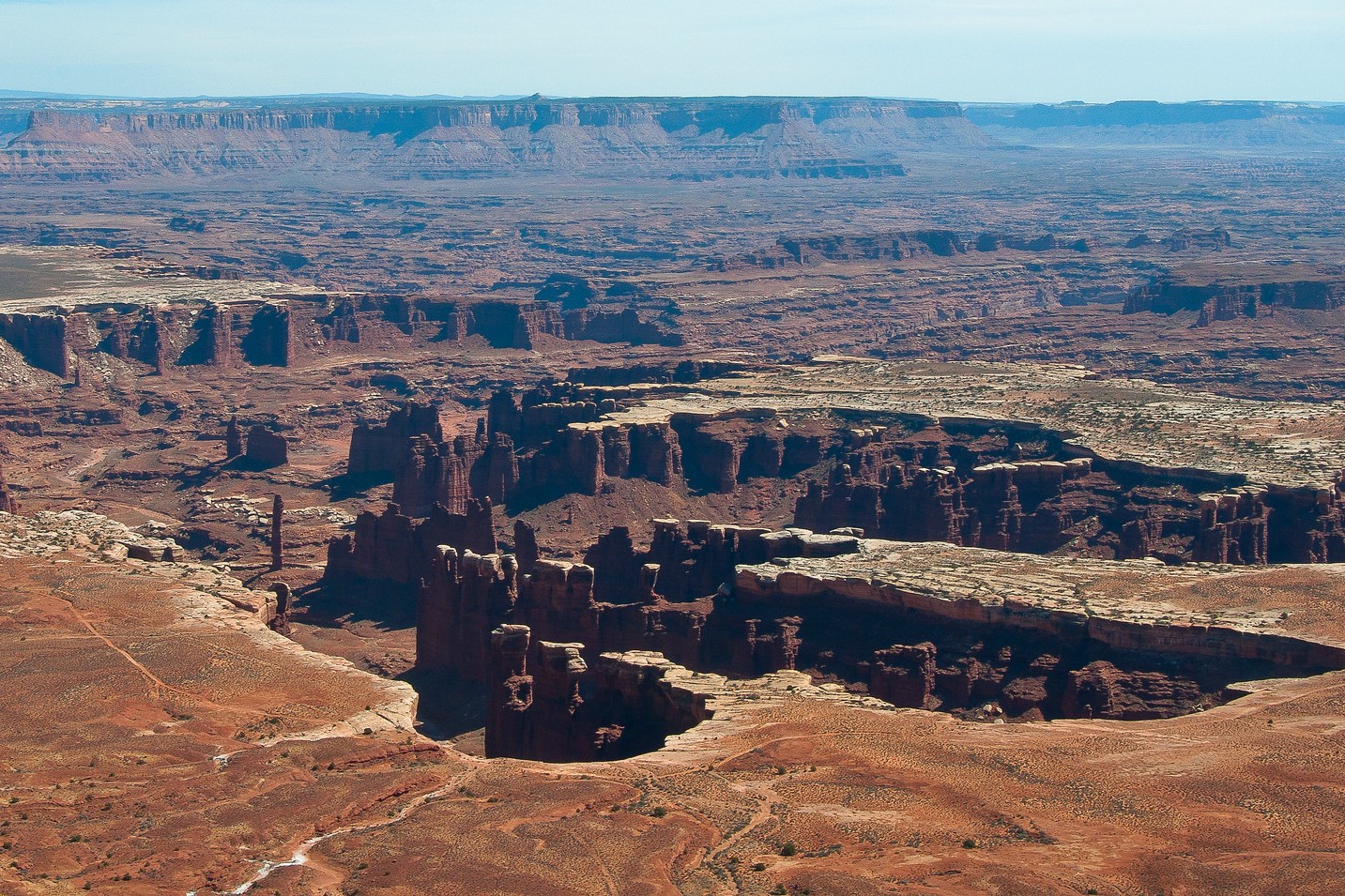
Four unique districts of mesas, canyons, and rivers carved by time and water, providing stunning sweeping vistas and historic remnants from millennia of human presence.

4 Distinct Districts
200+ Trail Miles
337k Acres
1964 Year Established

Our Take

Canyonlands goes hand in hand with Arches National Park, but they are incredibly different parks. Where Arches is a compact park with short family-friendly hikes, Canyonlands is a sprawling 337,000 acres of rugged terrain including some of the least visited countryside in the US. And despite the highway exits for these two parks being only a few miles apart, Canyonlands only gets half as many visitors as Arches, which makes it a great place to get away from the crowds and experience a more peaceful park setting.

I'll be honest that the first time I visited the park, it didn't go straight onto my bucket list to return to right away. We did the usual visitor's first experience and explored the scenic drive and short trails in the Island in the Sky district, and while it was a stunning experience I didn't immediately get that hiker itch to go back that I usually do for my favorite parks. (We'd go back to Banff multiple times a year if we could, for example.) It wasn't until we saw Jeeps crawling along the rugged White Rim Trail from a distance, realized how powerful some of the ancient art in Horseshoe Canyon is, and visited the Needles District to the south that we realized why this park earns a small but incredibly loyal audience of repeat visitors. When you're in Moab you'll see them everywhere rolling through in desert-dusted jeeps and off-road vehicles, sun-browned and ready to get back out there.

If you're short on time or a more casual visitor, stick to the Island in the Sky district and make a point to stop into Dead Horse State Park’s stunning overlook on the way. But if you're a hiker at heart or you want to experience a bit more adventure, the other districts are where the real rustic power of this park lies. Needles for Hiking, Rivers for rafting, and The Maze for some truly epic off-road multi-night journeys.

That said, you need to know your limits when you're exploring this park, especially in the summer. It's hard to overstate just how brutal the heat can be, and it can be easy to lose a trail when there are minimal markers in a desert landscape that all looks the same. Don't casually wander onto a 5+ mile trail without maps and water, pay close attention to your current water reserves, and understand that younger children and older family members will be impacted first. Guided tours are a great way to explore the more remote regions of this park like The Maze and River Districts, and can be a better option than trying to trek some of these areas on your own for the first time.

Things to Do in Canyonlands National Park

Visit Mesa Arch at Sunrise

Mesa Arch is one of the most iconic sunrise spots in the National Park system. The arch sits at the edge of the Island in the Sky mesa, framing a 1,200-foot drop into Buck Canyon, and at sunrise the rising sun lights up the underside of the arch in a deep glowing orange. The hike to the arch is an easy 0.5-mile loop from the parking lot.

Island in the Sky Scenic Drive

Explore Canyonlands' greatest scenic vistas by driving the 34-mile round trip, exploring the Shafer Switchback overlooks, Buck Canyon Overlook, Grand View Point, and Green River Overlook (our favorite of the bunch). Mesa Arch, Aztec Butte, and Upheaval Dome are along this route.

Upheaval Dome

A short walk from the trailhead brings you to the rim of one of the most debated geological features in the American Southwest — a colorful, crater-like bull's-eye right in the middle of the mesa. Scientists are still arguing over whether a meteorite or an ancient salt dome created it, which makes standing at the edge and forming your own theory about the mystery half the fun.

Visit Dead Horse Point State Park

On the way to Island in the Sky, the turnoff for Dead Horse Point State Park splits off from UT-313 about 8 miles before the Canyonlands entrance — and we'd argue the view from Dead Horse Point itself is at least as dramatic as anything in Island in the Sky, if not more. The park sits 2,000 feet above a tight gooseneck of the Colorado River, with the Potash evaporation ponds visible as bright turquoise rectangles in the distance. Entry requires a separate state park fee (not covered by the America the Beautiful pass), but the overlook alone justifies the stop.

Aztec Butte

A short scramble up slickrock leads to sweeping views of Taylor Canyon, and tucked into the alcoves just below the rim are well-preserved Puebloan granaries where ancient people stored food and seeds on this high desert plateau. It's one of the easiest places in the park to stand within arm's reach of a structure that has survived intact for centuries.

Explore Potash Road

If you’re visiting Arches and Canyonlands, we highly recommend exploring Potash Road as a scenic drive! This 30-mile round trip will have you driving between stunning vertical cliff walls and the Colorado River, and is amazing in the early morning and sunrise to really bring out the color in the rock. Along the route you’ll pass popular spots for climbers, ancient petroglyphs you can see from the roadside, and stunning geological formations on either side of the road. When you reach the Potash factory, where you’ll turn around, you’ll be able to see the mesa Dead Horse State Park is located on to the west. Getting there is easy, with the entrance on the south side of the highway between Moab and the Arches entrance, and it’s worth checking out even if you only have time for half the drive.

Take A Guided Tour On The Colorado River

Moab is a major launching point for several Colorado River tours, ranging from 3-5 hour casual mostly-dry scenic floats, to 2-5 day rafting adventures running deep into Canyonlands and all the way to Lake Powell.

Explore The Needles District

Canyonlands’ best hiking can be found in the Needles District. Casual visitors can enjoy the scenic drive, Newspaper Rock on the way in, and small trails, such as the Cave Spring Trail with its historic cowboy camp. Visitors looking for a longer scenic hike should head for Chesler Park (moderate) or Druid Arch (strenuous on the final climb).

Tips for Visiting Canyonlands National Park

1

Prepare For The Heat And Sun

Hiking in the desert is different than hitting mountain trails, and one of the biggest things that always catches us off guard the first day is just how hard the sun hits even in cooler months. There's no shade on most trails, light reflects off everything, and with no exaggeration I got sunburnt within 20 minutes on a light interpretive trail and was lucky I was carrying the sunscreen with me, so we didn't all have to hoof it back to the car immediately. Prep for your trip by having the right gear on hand if you're going to be hiking (even if it's an easy 2 mile hike), including more water than you think you'll need, sunscreen, sunglasses, hat, and a long-sleeved sun shirt.
2

Take a Mid-Day Heat Break

One of the best things you can do to enjoy Canyonlands is start your activities early in the day when it's cooler and take a break from 11-2 (or 10-3 in summer) before returning to your activities in the afternoon when the sun is dropping. A "break" can even be a scenic drive and exploring overlooks like Dead Horse Point, just know that you won't get the best color or lighting for photos. We typically go back to Moab or even our hotel on particularly hot days to wait it out, but there are several picnic areas including the visitor center with tables and shaded pergolas where you can stop, have your lunch, and wait it out.
3

Pack In All Food & Beverages

Canyonlands does not have any places to buy food or beverages, and water is primarily found at the Island in the Sky and Needles visitor centers. You’ll want to pack in a full day’s water before you hit the trails, as many are further removed from the visitor center and you won’t be wanting to drive back and forth. We fill our hydration packs and always pick up a cheap pallet of bottled water and/or jugs to keep in the trunk because we don’t want to find ourselves unexpectedly short on water (we just fill up back at the car). If you’re packing anything that can spoil, you’re also going to want a cooler because food will bake in a car while you’re hiking — we travel with a folding travel cooler from REI and love it.
4

Mesa Arch Sunrise Photography: Arrive Early And Have A Plan

Behind every photo of Mesa Arch at sunrise, what you don’t see is the dense line of cameras and photographers all jostling for space in front of the arch. If you really want to capture this iconic photograph it can be extremely helpful to scope out Mesa Arch the evening beforehand to figure out exactly where you want to place your tripod, because chances are you're not going to have the opportunity to move around to find that spot in the morning — the free space will all be taken. Mesa Arch is one of the most photographed sunrise locations in the world, especially as it’s accessed on a very easy .5-mile trail, so to get a good vantage point at peak season plan to arrive at the parking lot 60 – 90 minutes before the official sunrise. Not a photographer and frustrated with the pack of people blocking your entire view of the arch on what you thought would be a beautiful sunrise experience? While you won’t be able to see sunrise through the arch itself, walk up the slickrock a little to the left of the arch and you’ll get a clear view you can enjoy.
5

Plan Visits to Different Districts on Different Days

Each Canyonlands district only has a single paved road leading into and out of the district, so in order to visit another district you'll need to head back out to the highway and it can be a 2-4 hour drive between districts. Plan your trip by grouping activities in each district together, such as visiting Island in the Sky one day and Needles on another day.
6

The White Rim Road Requires Planning and a Permit

The 100-mile White Rim Road that loops below Island in the Sky is one of the most famous backcountry routes in the Southwest, but it's not something to attempt casually with an unknown rental car. The full loop typically takes 2-3 days, requires high-clearance 4WD (and ideally a second vehicle for self-rescue), reservations through Recreation.gov for any overnight camping, and serious route preparation. Mountain biking the full loop is a multi-day affair with vehicle support.

Best Time to Visit Canyonlands National Park

Our pick: Mid-March to Mid-May.

Our favorite time to visit Canyonlands is mid-March through early May, because as a hiker family we find the spring to have the most balanced weather months that hits the sweet spot of being cool in the morning (but not freezing) yet still warming up enough in the afternoon to enjoy river rafting and other open-air off road tours. If you're solely visiting for photography, you'll want to consider Nov – February as the best time to avoid crowds and enjoy the shorter days which make sunrise later and sunset earlier, but you'll need to be prepared for colder mornings and more limited park services.

Average Park Visitors by Month

Temperature by Month

Cold (< 55°F)
Ideal (55-80°F)
Hot (> 80°F)
Average

Getting to Canyonlands National Park

Visitor Centers

Island in the Sky Visitor Center

The main visitor center is located just past the entrance station at the north end of the Island in the Sky mesa about 30 miles southwest of Moab. The center has interpretive exhibits on the geology and ecology of the park, a bookstore, ranger-staffed information desk, and restrooms. They also have some great picnic areas just outside the visitor center that make for a good spot to stop and enjoy lunch. This is the place to ask about current backcountry road conditions, get permits for the White Rim Road, and check on weather before any longer hike. There's a water station here but the line can get long, so try to fill up before you enter the park and use this as a refill.

Needles Visitor Center

Located just inside the Needles District entrance about 75 miles south of Moab via US-191 and UT-211. The Needles visitor center is smaller and has the feel of a remote outpost. Stop here for trail conditions, backcountry permits, and to fill water bottles before heading into the longer hikes. Cell service is essentially nonexistent in this district, so any planning that depends on connectivity should happen before your visit.

Entrances

1

Island in the Sky (US-191 / UT-313)

The most-visited entrance, accessed by turning west from US-191 about 11 miles north of Moab onto UT-313. This route quickly turns scenic as it takes you past distant mesas and begins the climb to Island in the Sky on a 22-mile trek to the entrance station. The turnoff for Dead Horse State Park is just before the entrance station. Take caution driving in the dark in this area, as cows free range on the upper mesa and may wander onto the road.
2

Needles District (UT-211)

The Needles District is reached by heading south out of Moab for 40 miles and then turning west onto UT-211. The road is paved all the way to the entrance and much of the scenic drive. The first part of the drive you'll be driving through a part of Bears Ears National Monument, and Newspaper Rock will be on your right (north) as you head towards the park and is well worth a stop for anyone interested in petroglyphs and ancient history.
3

Maze District (UT-24)

The Maze entrance can be found by heading west from Moab and then taking UT-24 south for approximately 23 miles. Just past the turnoff for Goblin Valley State Park will be a left-hand (east) turn onto a washboard dirt road that will take you southeast to the ranger station. There is no formal visitor center here, and there are no services like gas, food, or water. This is primarily used as an access point for the multi-day treks into the Maze with 4WD high-clearance vehicles. GPS navigation is also unreliable in this area, so plan your route ahead of time and have a paper map on hand.

Entrance Fees

Vehicle
$30
Motorcycle
$25
Per Person (foot/bike)
$15
Local Annual Pass
$55

Where to Stay

Gateway Towns

32
mi northeast

Moab (Island in the Sky District) Our Pick

Moab is the obvious base for any Canyonlands trip and the same town that anchors a visit to Arches. The town has a strong selection of hotels, restaurants, gear shops, and outfitters, and the turnoff for the primary park entrance is just a few miles past Moab's north exit. While you will find cheaper lodging in other nearby towns like Green River, Moab provides the best all-around launching point for your adventures to reduce driving times if it's within your budget, and is our top pick for first-time visitors to the area.
Best for: First-timers, foodies seeking a large variety of dining options, and hikers/photographers starting before sunrise.
55
mi south

Monticello (Needles District)

Monticello is a small town on US-191 that's significantly closer to the Needles District than Moab is — about 35 minutes from the entrance versus 90. Lodging is more limited and less polished than Moab, but it's noticeably cheaper and quieter, and the town sits at higher elevation so summer evenings are pleasantly cool. Worth considering if you're spending serious time in the Needles or combining the trip with Bears Ears National Monument.
Best for: Visitors planning multiple days in The Needles
120
mi west

Hanksville (Maze District)

Hanksville is a tiny desert Utah town situated on the route between Capitol Reef and Moab, and while hotel options are sparse, they're clean and quiet. If you're eager to visit Horseshoe Canyon but don't want a multi-hour drive, Hanksville is much closer at a little over an hour, and you're close to Goblin Valley State Park. It's also 30 minutes from the east entrance to Capitol Reef, and a great kickoff point for the rugged scenic drives including Capitol Reef and Loop the Fold, as well as "easier" access to amazing photography opportunities nearby with Factory Butte and the Moon Overlook. Just keep in mind that many of these adventures are going to be more reliably done with at least AWD, and should be researched in advance to know that your vehicle (and fellow passengers!) are up for the bumpy ride.
Best for: Travelers headed out into The Maze or Horseshoe Canyon unit or combining with Capitol Reef
62
mi southeast

Green River

Honorable nod to Green River, a quiet small town northwest of the parks and Moab. While we prefer the towns above for easy access, Green River is known as a more budget-friendly alternative to Moab itself, and can be a good spot to check out if you're on a tight budget or are traveling with a large party needing multiple rooms (at which point the additional $80-$150 per room difference in Moab adds up fast). The key tradeoff here is that lodging and dining options are very limited, and you're an hour's drive to the primary visitor center -- and then you'll have to drive to your trailhead, overlook, etc. beyond that.
Best for: Budget travelers looking for a quiet home base

Frequently Asked Questions

Is the park open year-round?

+

Yes, but some facilities close in winter or have limited hours. The Island in the Sky Visitor Center is open 7 days a week, except Thanksgiving and Christmas Eve when they close early, and Christmas Day when they are closed completely. The Needles Visitor Center operates 7 days a week mid-February to early December, but then closes for winter. Check out the official NPS page for specific details on hours.

How should I decide which districts to visit?

+

Start with Island in the Sky and nearby Dead Horse State Park, both of which are great for abilities of all levels, and then add on from there based on your interests and capabilities. Want a few longer hikes with gorgeous canyons and unique scenery? Add on The Needles. Open to an overnight camping trip to hike a canyon (or a long drive to and from the canyon) and comfortable with driving a dirt road with sand dunes drifting over it? Check out the Horseshoe Canyon unit. Want to get way off grid for overnights in the park? Check out guided jeep tours into the Maze or river rafting on the Colorado or Green Rivers.

Are pets allowed in Canyonlands National Park?

+

Pets are only allowed in very limited areas. Pets are not permitted on hiking trails (even in a carrier), at the overlooks, in any building including visitor centers, or in the backcountry. They are permitted on paved roads, parking areas, and established front-country campgrounds, and picnic areas.

Does Druid Arch / Chesler Loop Require a Permit? Can I get there with a regular car?

+

No, you don't need a permit, and in dry weather you'll be fine with a regular car on the dirt road. This can be a bit confusing because you'll see instructions to drive Elephant Hill Road to access the trailhead, yet Elephant Hill Road also requires a permit and online videos will show incredibly rugged technical off-roading vehicles tackling some pretty impressive obstacles. The key here is that the permit is only for the portion of Elephant Hill that is past the trailhead's parking lot, and the road is a pretty basic dirt road prior to that point. You are free to day hike from this area, but going past it on Elephant Hill does require a permit and the right vehicle/equipment to tackle the route.

Would you recommend visiting The Maze as a casual visitor?

+

No. There is no real infrastructure or services, and there are no paved or standard gravel roads in the Maze. While experienced off roaders are able to visit parts of the Maze with a standard high-clearance 4WD, they've done so with a significant amount of planning, preparation, and equipment. There is no good spot to get out and 'explore just a bit of the Maze'. As a casual visitor, we recommend enjoying the sights from the overlooks in Island in the Sky, or booking a tour with an outfitter instead if you really want to see this part of the park.

Do I need 4WD for the Shafer switchbacks?

+

No, but with a few caveats. When the weather has been dry, many people have reported taking a regular car down the switchbacks and turning around to come back up, but we personally wouldn't do it in a car due to the low clearance (we rent an AWD SUV when we're in the area). However, you don't want to attempt this in wet or icy conditions, and you're going to want to turn around at the bottom of the switchbacks and head back up. While there is a way to drive down the switchbacks and to Moab, it's a very rocky and bumpy ride requiring high clearance and often needs a more technical off road vehicle to be able to get past obstacles when the road is washed out.

Can I stay in the park?

+

There are two campgrounds in Canyonlands, one in Island in the Sky and one in The Needles, but no formal lodge or hotel.