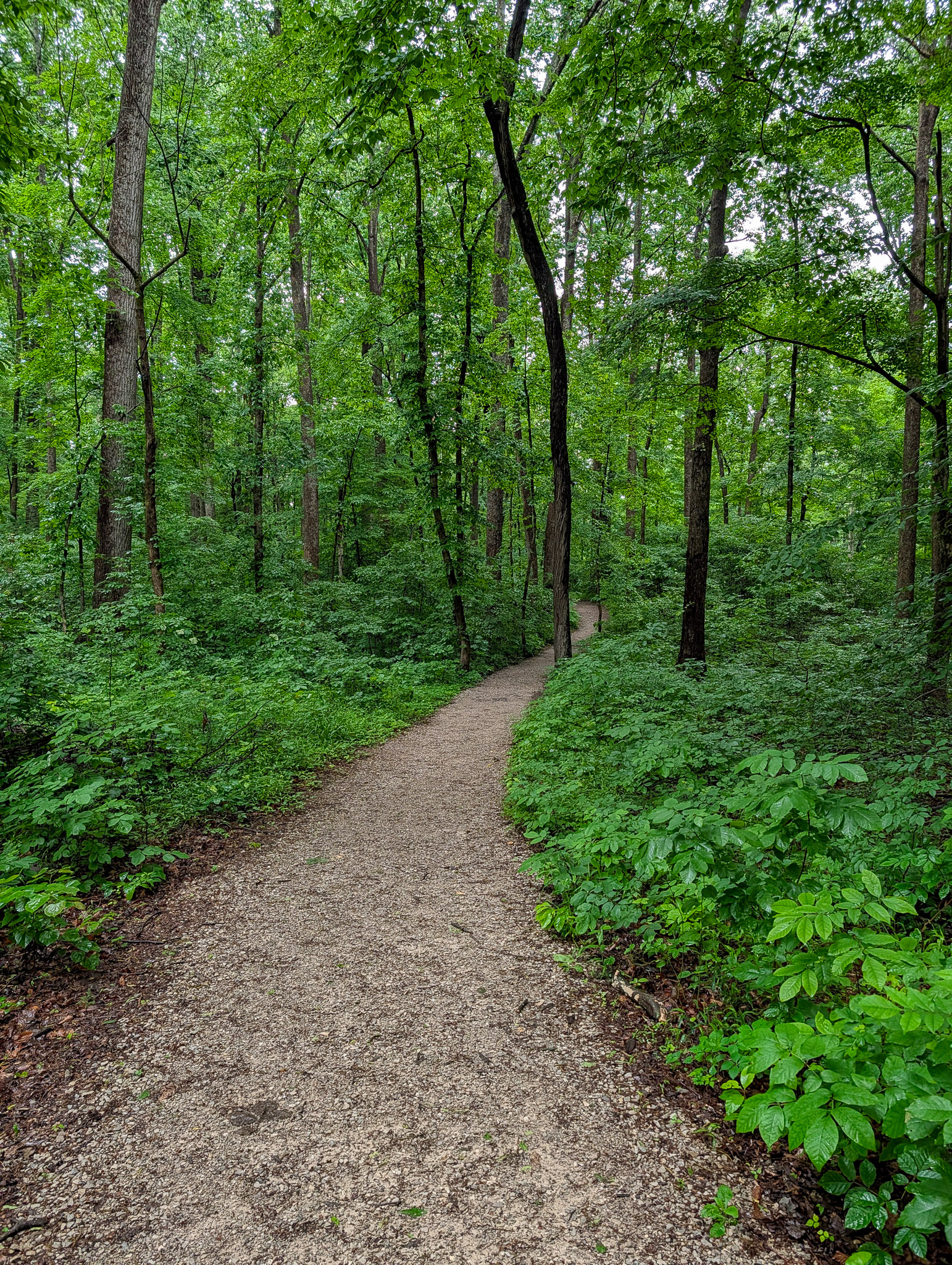
It would be easy to visit Mammoth Cave, take a cave tour, and never realize how much of the park there is to explore above ground. More than 60 miles of backcountry trails run through the forests north of the Green River, while 7.2 miles of interconnected trails wind around the Visitor Center, with several more short hikes scattered across the south side of the park.
We recommend sticking to the south side of the park, especially the region around the Visitor Center where trails follow the bluffs above the Green River and lead to sinkholes, springs, and cave openings that give you a better sense of what’s happening underground. These are the trails (along with the tours) that are going to give you a better understanding of why Mammoth Cave is a National Park. The northern section admittedly feels more like a state park with muddy forested trails with less unique geological features on display, and can be much more difficult to access when the Ferry isn’t running, so we recommend skipping them unless you’re in the area for a much longer period of time.
Always check for trail closures before you set out – recently there has been a lot of work going on at the Visitor Center hub, which often closes some of the connecting trails between the larger loops.
Be sure to prioritize an underground cave tour over the trails, though, as the true stunning views are below ground. If you time your hikes for after a tour, you’ll have a greater appreciation for how the rivers and sink holes you see help shape the cave itself. Check out our guide to Mammoth Cave’s cave tours for more information.
Cedar Sink
1 mi • 300 ft • Loop
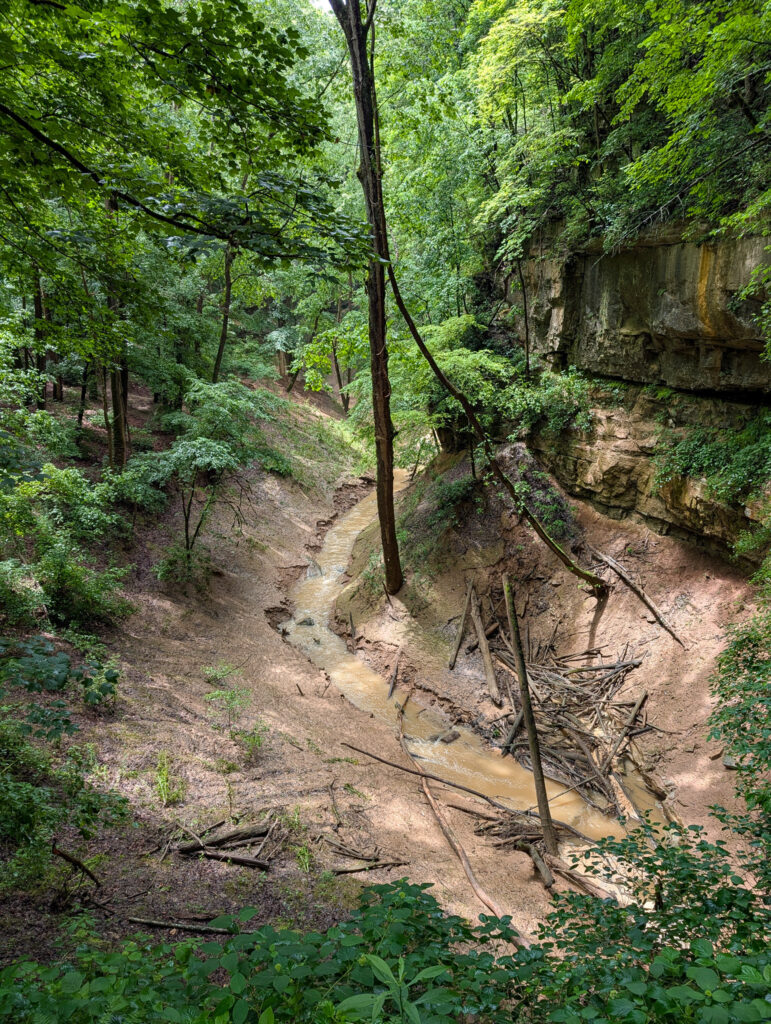
Cedar Sink starts as a walk through dense, green forest before a series of metal stairs takes you down into the sink. At the bottom, a muddy stream winds beneath exposed limestone walls, one of the places where the landscape above Mammoth Cave starts to reveal what’s happening underground.
The trail continues along the rock walls, with overlooks and spaces tucked beneath limestone ledges before climbing back through the woods. It’s only about a mile, but NPS counts 295 stairs along the route, so expect plenty of up and down.
Green River Bluffs
1.3 mi • 400 ft • Point to Point
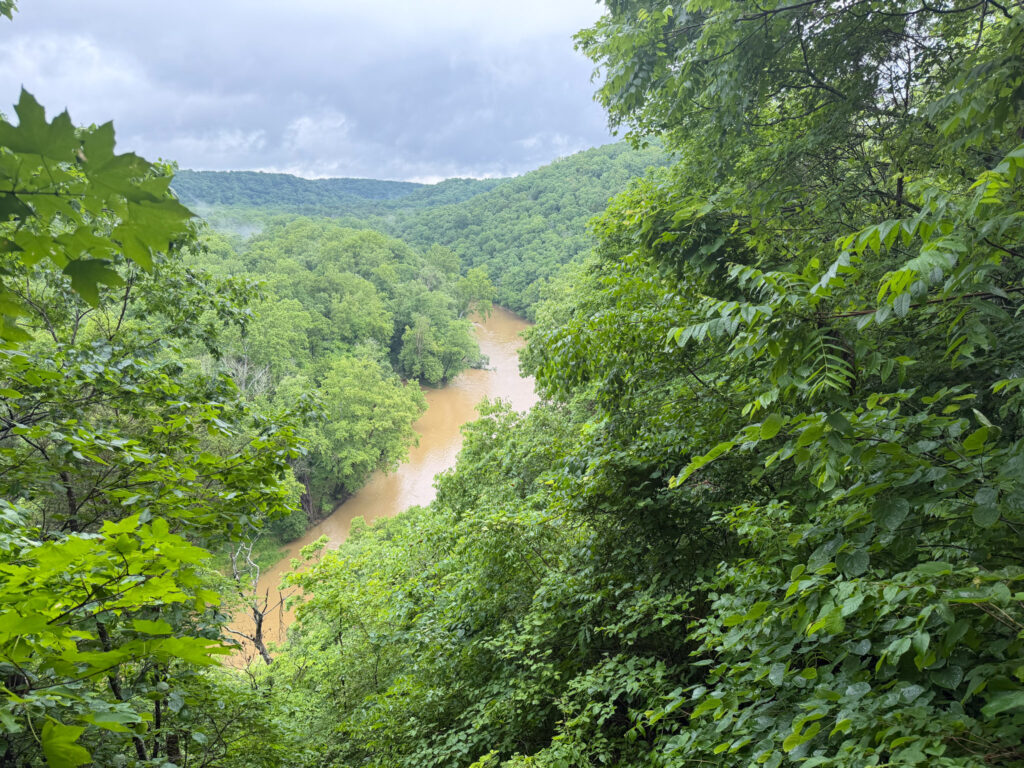
Green River Bluffs starts at the Mammoth Cave Picnic Area, just beyond the Woodland Cottages north of the Visitor Center. It’s one of the better hikes for views of the Green River, following a wooded ridge to viewpoints through the trees above the river. The trail runs through dense forest with plenty of rocks and roots underfoot. We hiked it wet, which made some sections slick, so watch your footing after rain.
The views are framed by the trees rather than wide-open overlooks, with the river and surrounding hills visible below. We connected this trail with River Styx Spring for a longer hike. With so much hardwood forest, this is one we’d like to come back to when the leaves change in fall.
River Styx
1.2 mi • 250 ft • Out & Back
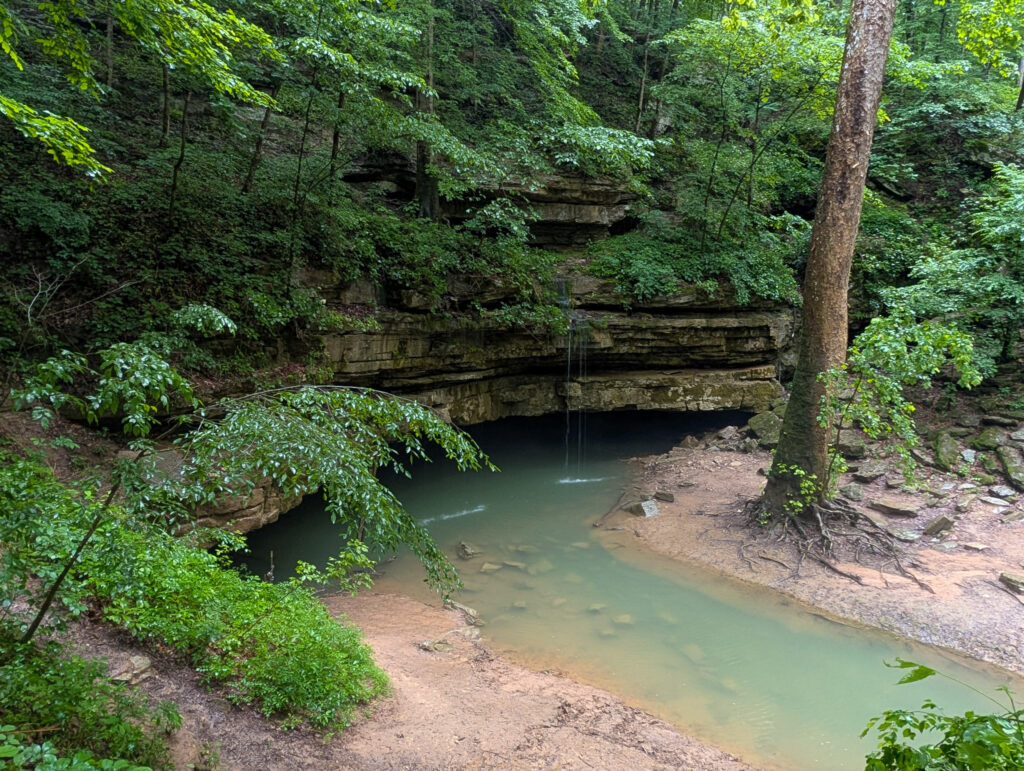
River Styx Spring is worth the hike for the spring itself, where blue-green water emerges from the Mammoth Cave system beneath tall limestone walls before flowing toward the Green River. A boardwalk at the end of the trail gives you a good view of the spring, the cave opening, and the surprisingly colorful water below.
The spring sits within the Visitor Center trail network, so there are several ways to build it into a longer hike or loop it back to the Visitor Center. We combined it with Green River Bluffs, but check current trail closures before choosing your route.
Sand Cave
0.2 mi • 20 ft • Out & Back
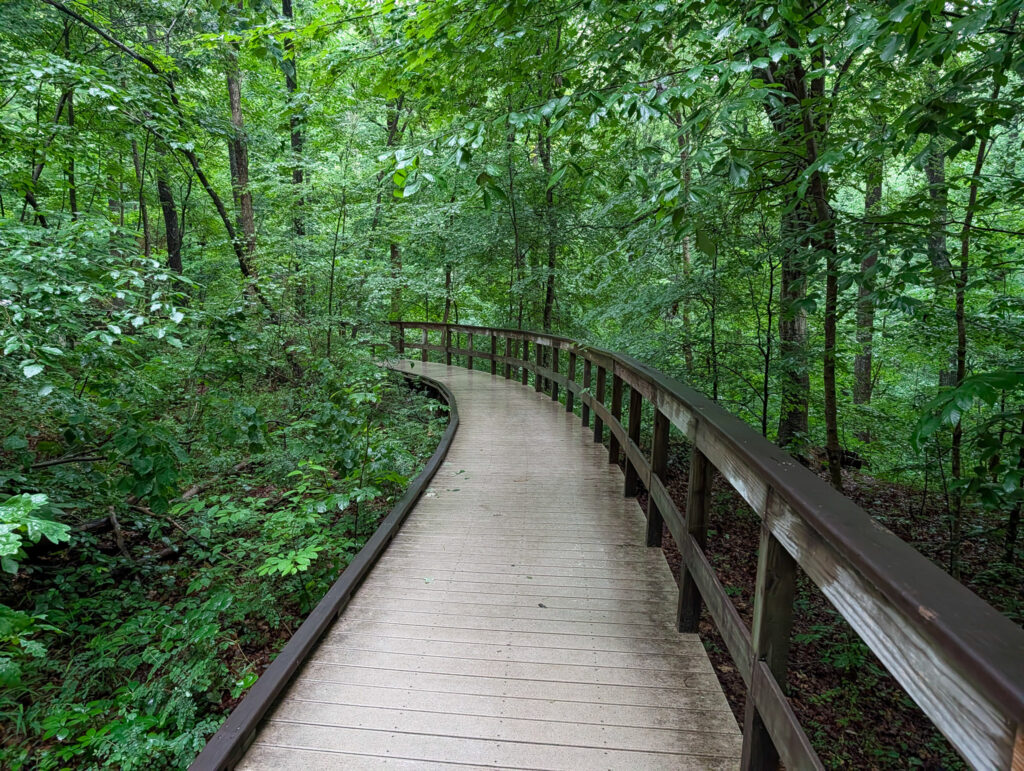
Sand Cave is less of a hike than a short walk into one of Mammoth Cave’s most fascinating stories. A wooded boardwalk leads to an overlook near the cave where Floyd Collins became trapped in 1925, setting off a rescue effort that drew national attention before he ultimately died underground.
The walk itself only takes a few minutes, but the Floyd Collins story makes it worth the stop.
Sloan’s Crossing Pond Walk
0.4 mi • 0 ft • Loop
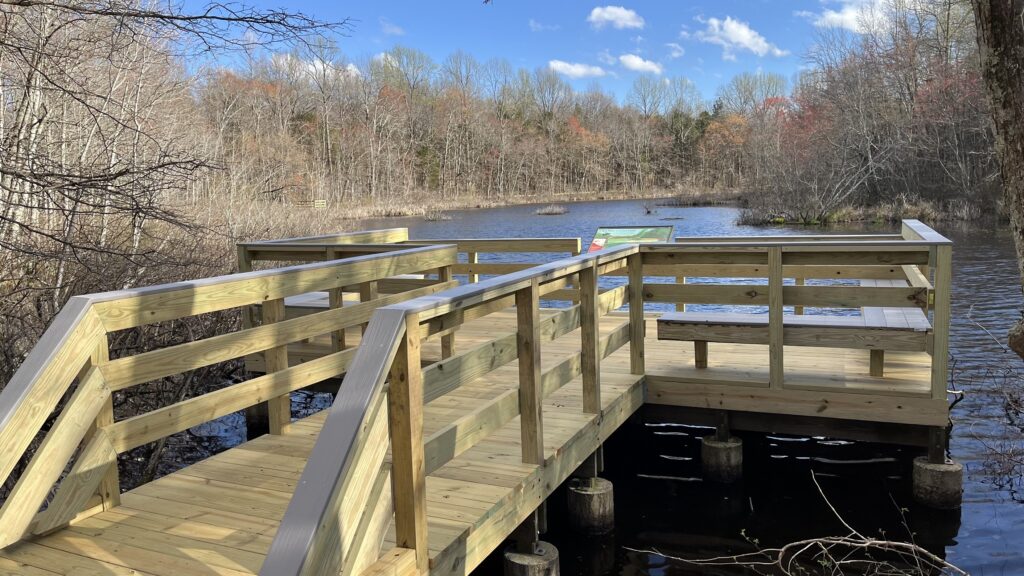
Sloans Crossing Pond Walk is an easy 0.4-mile, wheelchair-accessible boardwalk loop and a good option for families or anyone interested in spotting wildlife. The trail circles a marshy pond, with overlooks and interpretive signs explaining the wetland environment along the way. Keep an eye out for turtles and frogs around the water, along with red-winged blackbirds and other wetland birds in the surrounding vegetation.